If you manage a hotel, a B&B, or an Airbnb, you already know the most frequently asked question from guests: “What is the Wi-Fi password?”
In the past, providing a great guest experience meant printing a thick, physical welcome book. But let’s face reality: paper guides get torn, stained, or lost. Local restaurant recommendations become outdated within months, and forcing a tired traveler to manually type a complex 16-character Wi-Fi password is an unnecessary friction point after a long day of transit.
Today’s modern traveler expects a seamless, contactless, and on-demand experience. The hospitality industry has shifted, and relying on outdated paper methods is actively hurting your reviews. It’s time to upgrade your property with Dynamic Hospitality QR Codes.
From Frustration to Instant Connection
By strategically placing beautifully designed QR codes around your property—elegantly framed on the nightstand, magnetized to the fridge, or right at the entrance—you instantly bridge the gap between physical space and digital convenience.
Here is how smart hosts and hotel managers are using QR codes to elevate their ratings, save hours of management time, and boost their revenue:
1. The Instant Wi-Fi Scan: The Perfect First Impression
First impressions are everything. Picture your guest: they’ve just endured a long flight, a stressful drive, or a delayed train. The last thing they want to do is hunt for the router or decipher a handwritten password on a laminated card.
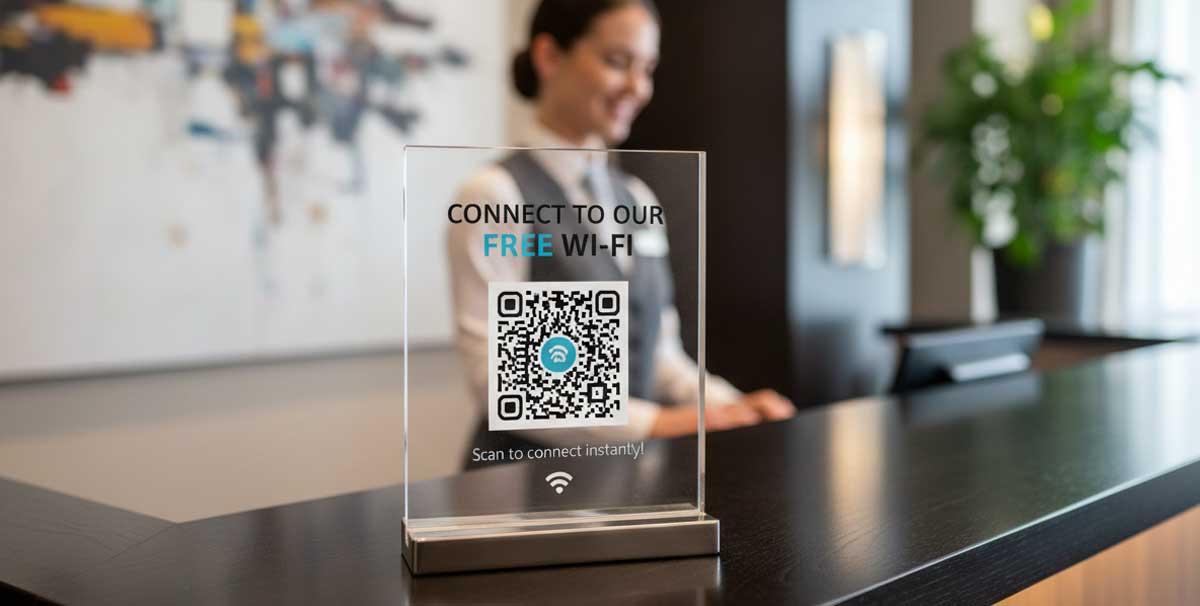
With a dedicated Wi-Fi QR Code, guests simply point their smartphone camera at the frame and are connected to your high-speed network in less than a second. No typos, no frustration, and zero late-night text messages to you asking, “Is the ‘O’ a letter or a zero?”.
By removing this initial friction, you immediately set a tone of modern hospitality and effortless comfort.
2. The Dynamic Welcome Book: Your 24/7 Digital Concierge
Replace your bulky, unhygienic paper binder with a Link QR Code that opens a comprehensive digital guide (hosted on a PDF, Notion page, or dedicated app).
The advantages here are massive. First, a digital guide travels with your guest on their phone while they explore the city, unlike a physical book left on the coffee table. Second, you can include multimedia: add a quick video tutorial on how to use that tricky espresso machine, how to turn on the hot tub, or how to operate the smart TV. You empower guests to find answers themselves, drastically reducing the number of troubleshooting questions you receive during their stay.
3. Always Up-to-Date Recommendations: Build Ultimate Trust
Being a “Superhost” means being a reliable local expert. But cities change fast. Did your favorite local brunch spot change its opening hours? Did that great museum close for renovations? Recommending a closed restaurant leads to angry guests and bad reviews.
Because these QR codes are dynamic, you can update the destination link on your backend anytime, instantly. You never have to reprint the physical QR card in the room. You can even curate seasonal lists—linking to the best beaches in July, and swapping the link to the best Christmas markets in December. Your recommendations are always fresh, accurate, and tailored.
4. Upselling Services: The Silent Revenue Generator
This is where QR codes transition from a guest convenience to a powerful business tool. You can use QR codes to actively drive ancillary revenue.
Guests are far more likely to purchase upgrades if the process is frictionless. A QR code placed on the desk can link directly to a digital room service menu, a spa booking calendar, or an automated portal to pay for a late check-out. Instead of having to call the front desk or message the host—which many introverted travelers avoid—they can impulsively order a bottle of wine, request a mid-stay cleaning, or book a local tour with a single tap. You turn every room into a silent, 24/7 point of sale.
Ready to become a Superhost?
Stop printing paper that ends up in the trash and start providing a premium, digital-first welcome. Technology should make hospitality feel more personal, not less.
With QRcdr.pro, you can generate beautiful, branded Wi-Fi and Link QR codes that match your property’s aesthetic. Even better, you can update them remotely from anywhere in the world, and track scanning analytics to see exactly what your guests are interacting with. Enhance your guest experience, secure those 5-star reviews, and let your digital concierge do the heavy lifting.