For decades, consumer packaging followed a simple formula: print the brand logo, a barcode for checkout, a handful of regulatory icons, and an ingredients list in microscopic 5-point type.
In the European Union, that era is coming to a definitive close.
Under the EU’s sweeping Ecodesign for Sustainable Products Regulation (ESPR) —alongside sector-specific mandates like the EU Battery Regulation and the landmark wine e-labeling laws —physical packaging is no longer large enough to accommodate the legal disclosures required to sell goods in the single market.
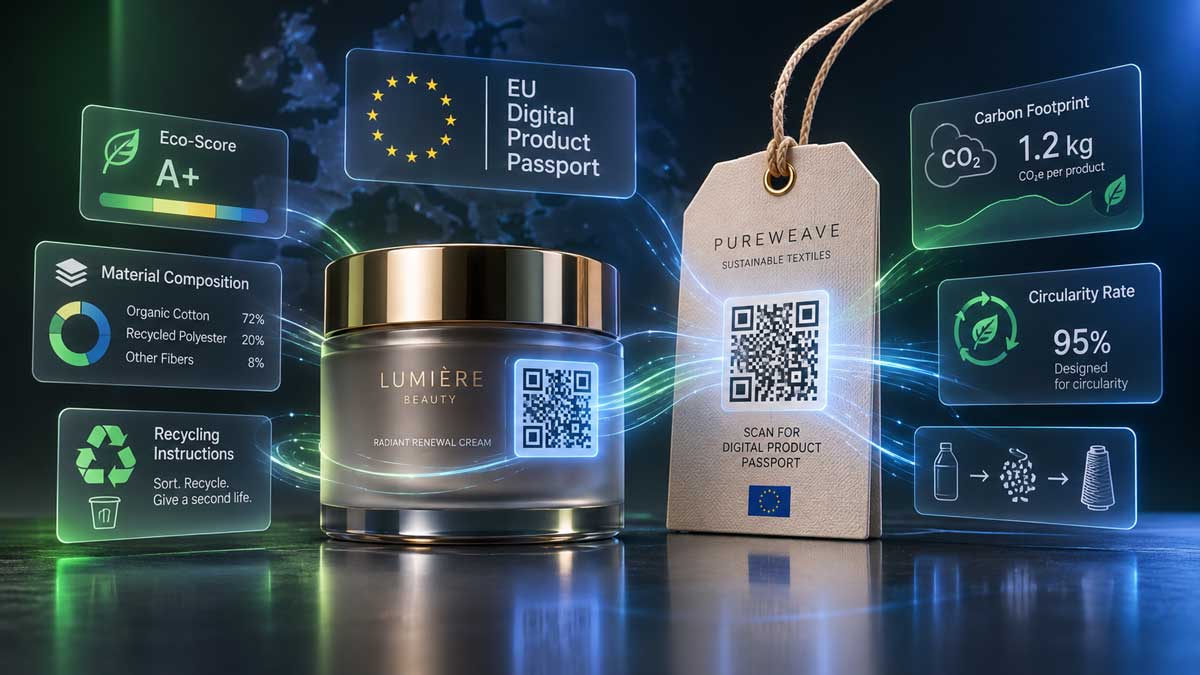
Enter the Digital Product Passport (DPP): a standardized, machine-readable digital record that travels with physical goods throughout their entire lifecycle. From raw material provenance and carbon footprints to disassembly instructions and recycling guidelines, products sold in Europe must now carry an open gateway to their digital twin.
The primary physical bridge chosen to deliver this data is the QR code.
For brand managers, packaging designers, and digital agencies, this transition is not just a regulatory hurdle. It is a fundamental shift toward smart packaging that requires robust, resilient, and legally compliant dynamic QR infrastructure.
Here is what your brand needs to know about the DPP mandate, the hidden legal traps in implementation, and how to architect a compliant digital carrier.
What Is the EU Digital Product Passport (DPP)?
The Digital Product Passport is a core pillar of the European Green Deal and the Circular Economy Action Plan]. Its objective is radical transparency: enabling consumers, repair professionals, and customs authorities to make informed choices and accelerate product circularity.
Rather than printing dense multi-page booklets in thirty languages, brands must affix a physical data carrier—overwhelmingly standardized on dynamic QR codes aligned with ISO/IEC standards or GS1 Digital Link structures—to the product, packaging, or attached documentation.
Priority Sectors and Implementation Timeline:
- Wine & Aromatized Wine (Active Now): Under Regulation (EU) 2021/2117, every wine bottle sold in the EU must disclose full nutritional values and allergen/ingredient lists via an on-pack QR code.
- Industrial & Electric Vehicle Batteries: Mandatory battery passports covering carbon intensity, recycled content, and supply chain due diligence.
- Textiles, Apparel & Footwear: Prioritized under ESPR to eliminate fast-fashion waste, tracking fiber composition, hazardous chemical disclosures, and durability metrics.
- Consumer Electronics & ICT: Detailing repairability indices, spare parts availability, and dismantling workflows to counter planned obsolescence.
- Cosmetics, Chemicals & Construction Materials: Phased rollouts following delegated acts across the European single market.
3 Critical Legal and Technical Traps Brands Must Avoid
Deploying a QR code for DPP compliance is fundamentally different from running a seasonal marketing sweepstakes. The regulatory bar is exceptionally high, and mistakes can result in customs blocks, product recalls, or severe fines.
1. The Strict “No Marketing / No Tracking” Rule
The European Commission made its intentions crystal clear in the wine e-labeling guidelines: regulatory compliance portals cannot be blended with commercial marketing [3].
If a consumer scans an official compliance QR code:
- The landing page must not display promotional banner ads, cross-selling popups, or direct e-commerce purchase links.
- The destination must not track or log user behavior through invasive marketing cookies (Meta pixels, Google Ads tags, or third-party profiling trackers).
- Collecting personal user data without explicit regulatory justification violates both the sector-specific mandate and GDPR.
Brands that use generic marketing shorteners or ad-supported QR platforms risk severe regulatory non-compliance on day one.
2. The Permanence Trap: Why Static Codes Are Fatal
Some manufacturers attempt to comply by hardcoding a static URL into a printed vector code (e.g., pointing directly to a specific PDF hosted on their corporate website).
This is a critical operational error. A product like a jacket, a lithium battery pack, or a power tool has a lifespan of 5 to 15 years. If your website structure changes, if your hosting provider migrates, or if a supplier substitution modifies your material declaration, a static printed code becomes a permanently broken link.
Compliance demands dynamic redirection:
- The printed code points to a permanent, immutable routing endpoint on a domain you control.
- The backend routing logic resolves the query dynamically, directing the user to the correct technical sheet, batch documentation, or language version.
- Updates to the underlying compliance data occur in the cloud without ever recalling or re-printing physical stock.
3. Industrial Print Tolerances (Substrate Realities)
DPP codes are applied to diverse, unforgiving physical surfaces: woven fabric care labels, curved glass bottles, corrugated recycled cardboard, and laser-etched metal plates.
If a designer imports a low-resolution raster graphic (PNG or JPG), ink dot-gain or laser burning will blur the module boundaries. Compliance codes must be rendered as pure mathematical vector files (SVG or vector PDF) with strictly calculated quiet zones and error correction levels tuned to the physical substrate.
The Architectural Blueprint: Building a Compliant DPP Resolver
To build a reliable DPP framework, your technical architecture must separate the physical carrier, the routing resolver, and the compliance data layer.
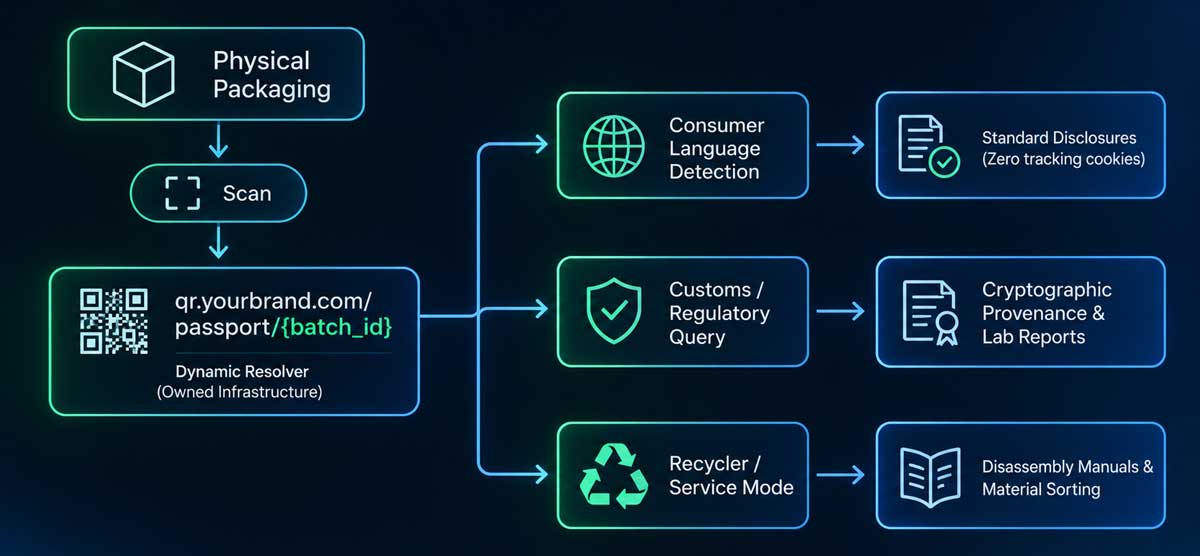
Key Technical Requirements:
- Granular Batch Routing: The system must allow you to assign unique destination sheets to individual production runs or SKUs without changing the root URL structure.
- High Availability & Speed: European customs authorities and consumers expect pages to load in under a second, even on low-bandwidth mobile connections.
- Complete Data Sovereignty: Using a rented SaaS provider whose servers sit outside European regulatory jurisdiction creates unnecessary legal friction. Hosting the routing engine on your own server infrastructure guarantees complete GDPR compliance and uninterrupted service.
The Business Opportunity for Agencies and Print Houses
While the DPP mandate represents a compliance headache for manufacturers, it represents a lucrative business transformation for digital agencies, prepress studios, and packaging houses.
Historically, packaging design was a one-and-done transaction: design the label, send the PDF/X to the printer, and invoice the client.
With Digital Product Passports, every physical label becomes a managed recurring service:
- Initial Setup: Auditing the packaging, generating vector-precision QR codes, and building the mobile-optimized, regulation-compliant landing interfaces.
- Dynamic Retainers: Charging manufacturers a monthly or annual retainer to host, maintain, and update batch documentation, compliance disclosures, and routing endpoints across thousands of SKUs.
- Turnkey SaaS Platforms: Deploying dedicated, white-label QR management platforms for corporate clients, enabling their compliance teams to manage their own digital passports under their corporate domain.
Deploying Your DPP Infrastructure with QRcdr
Meeting the strict demands of European smart packaging does not require enterprise middleware costing tens of thousands of dollars a year.
With the QRcdr Suite, agencies and brands have access to a battle-tested, self-hosted dynamic QR generation and management system:
- Pure Vector Exports: Generate flawless SVG, EPS, and PDF vector assets with customizable error correction levels (up to Level H) and strict quiet zone parameters—ensuring reliable reads across industrial flexo, offset, and screen printing.
- Batch-Level Dynamic Routing: Update destination URLs, redirect paths, and landing documentation instantly from an administrative dashboard without altering printed collateral.
- White-Label & Self-Hosted Ownership: Available both as a standalone PHP engine and as a comprehensive WordPress application (QRcdr PRO, available on veno.es). You host the platform entirely on your own servers or client domains.
- Zero Monthly SaaS Lock-In: Because you own the software, your links will never expire due to missed third-party subscription fees, ensuring compliance across the entire multi-year lifecycle of your products.
The 5-Step DPP Readiness Checklist
If your brand sells physical products into the European market, follow this roadmap to prepare your packaging pipeline:
- ✅ Map Mandatory Disclosures: Identify which EU delegated acts apply to your product categories (ingredients, repair manuals, battery chemistries, or recycled textile ratios).
- ✅ Audit Packaging Real Estate: Determine optimal placement for a minimum 15mm × 15mm vector QR code with a mandatory 4-module quiet zone on primary or secondary packaging.
- ✅ Establish an Owned Resolver Domain: Never use generic public shorteners. Configure a dedicated, brand-owned subdomain (e.g., passport.yourbrand.com or dpp.company.eu).
- ✅ Separate Marketing from Compliance: Ensure your DPP destination pages are stripped of marketing trackers, advertising popups, and non-essential cookies to remain compliant with EU guidelines.
- ✅ Standardize on Vector Output: Mandate that all production graphics use vector SVG/PDF assets to prevent catastrophic scanning failures on the shelf.
Smart packaging is no longer a futuristic marketing gimmick; it is an immediate regulatory reality. By deploying a flexible, self-hosted dynamic QR infrastructure today, your brand avoids last-minute supply chain disruptions and turns a regulatory mandate into a benchmark of consumer trust.
References
- [1] European Commission: Ecodesign for Sustainable Products Regulation (ESPR) – Regulation (EU) 2024/1781.
- [2] European Parliament & Council: Regulation (EU) 2023/1542 concerning batteries and waste batteries.
- [3] European Commission Guidelines: Notice on the implementation of new EU wine labelling provisions under Regulation (EU) 2021/2117.
- [4] Circular Economy Action Plan (CEAP): European Commission sustainable product policy framework.
- [5] Global Battery Alliance (GBA): Battery Passport technical specifications and ESG metrics.